Tuesday, March 31, 2009

Netbooks and the business world

You can't deny 'em... Although skepticism abounds from the haters and pundits... I put points of interest in bold/italic: The entire section of "When netbooks make sense" ROCKS!!

Consumer technology continues to bleed into the enterprise and influence the budgets and deployment practices of corporate IT departments. In recent years, we’ve seen it happen with smartphones and instant messaging, for example. Now it’s happening again - with netbooks.

Gartner analyst Leslie Fiering said, “[Netbooks] are coming in as companion notebooks — as second notebooks — that workers are buying themselves. The question is whether notebooks are ready to come in as a sanctioned corporate laptop.”

In a recent TechRepublic poll, 21% of respondents said that their IT departments officially supported netbooks. Frankly, I was surprised that the number was that high since so many netbooks only run on Linux or Windows XP Home, neither of which is widely supported by IT for standard client machines.

See also: Are netbooks quietly driving us to thin clients and cloud computing?

Of course, there are now netbooks such as the Lenovo S10, the Acer Aspire One, the Asus N10, and the HP 2140 Mini that are more business-friendly, but those are new to the scene and typically more expensive than average the sub-$400 netbook. However, even with these “business netbooks,” IT departments should think carefully before trying to save a money by replacing standard notebooks with netbooks - even if users are requesting the netbooks.

Here are the three big drawbacks with netbooks that you need to keep in mind before you deploy a netbook to a corporate user:

1. Smaller screen resolution

Almost all netbooks have a seriously-cramped screen resolution. Because netbooks have screens 10 inches or smaller, they often end up with screen resolutions like 1024×600. This makes it difficult to work with many modern Web pages and applications that assume users have at least a 1024×768 screen.

While it can be a pain to have to do extra scrolling on a netbook, that’s not the game-breaker. The problem is that many custom applications and pop-up Web windows lock the size of the window. So if your screen isn’t big enough to handle it then the app or page becomes nearly impossible to work with.

There are even times when operating system windows and dialog boxes are too big to fit on the screen on a netbook. For example, the OK and Cancel buttons in a dialog box might be unclickable because the window is too big for the screen. When this happens, the average user will get pretty frustrated and could end up having to reset the system.

2. Cramped keyboards

For business users that do a ton of typing, netbooks can be extremely frustrating. Users will find that netbook keyboards have keys that are smaller and closer together, and far less friendly for business-class typing than Lenovo ThinkPads, HP EliteBooks, and Apple MacBook Pros.

The other problem with netbook keyboards is that, because they are so cramped for space, they often use non-standard keyboard layouts. Thus, the function keys, arrow keys, forward delete PgUp/PgDn, etc. can be in strange places or missing altogether. Some of the places the keys end up also interfere with the standard placement of other keys such as Backspace. This can take a lot of getting used to and it can be a significant productivity drain when the user regularly goes back-and-forth between a standard keyboard and a netbook.

3. Limited multitasking

The Intel Atom processors that power most netbooks are actually surprisingly capable. When working with one program, such as a Web browser, word processor, or e-mail client, the average user won’t notice much difference between the performance of a netbook and a standard laptop PC.

Where the netbook starts to have problems is when you’re working with a bunch of applications at a time, such as running your e-mail client in the background while editing a presentation and carrying on an IM conversation. Of course, the other thing that hurts you on a netbook when you’re doing this type of multi-tasking is the lack of screen real estate (see No. 1).

When netbooks make sense

Despite the three drawbacks listed above, this doesn’t mean netbooks don’t have a place in business. You just need to be aware of these limitations and then only deploy netbooks where they make sense in order to avoid bad deployments.

To help you get a feel for which industries, usage scenarios, and types of users are the right fit for netbooks, here is a selection of comments from TechRepublic members who have implemented netbooks or are seriously considering it:

art (Network administrator in Pennsylvania): “We use them as loaners and haven’t had a user request a full sized laptop since we first got them. I like the Linux models because I can create unprivileged borrower users who can’t damage the system. If they crap up the borrower account, I just delete and recreate the account. People like the portability and long battery life. 10″ is the minimum size for keyboard use. Borrower/travelers don’t care about slower CPU or storage size because the stuff they are doing doesn’t tax the hardware, and they really aren’t saving a lot of their stuff locally anyway.”

pierreclark (CIO in Illinois): “I am in the hospital right now waiting on my daughter’s birth. I’ve been here for five days. I’m typing this on my Acer Aspire One w/140 gb hard drive. Since I’ve been here, I’ve written dozens of e-mails, two reports and two PowerPoints (both of which I presented on supplied LCD projectors) using the full [Microsoft] Office package installed on the machine (although my personal favorite is Open Office). I consider this Acer almost the perfect PC; I would not have been able to get as much done on a big notebook which would have been very inconvenient for me to carry. Netbooks are selling on price and because they are incredibly useful for nearly every category of pc user.”

b.kinney1 (IT manager in California): “90% of our office uses laptops, while those who have to grind out compute intensive work (video edits, et cetera) use workstations. When those Desktop people go to meetings, they don’t have laptops to present their info, and leaving shared systems in each conference room is just begging for someone to start installing games for after hours. The middle ground is to get a few Netbooks for these people, and utilize tools like LogMeIn to provide access to their applications, data, and the like. I don’t see tools like Citrix supporting heavy apps like video editors over the WAN, plus the fact that this sort of work demands things like large monitors, compute performance and such. Pushing the files around (raw MP4 for example) is a network chore. Providing a netbook has worked for me.”

Tiger_Cane (IT manager in Florida): “My company, while not officially supporting any netbooks, is currently looking at them due to the steep price increase our computer vendor has presented us with for thier latest ultramobile laptop. Additionally, I know at least 3 of us (there may be more) that are using personaly netbooks while on travel since our remote infrastructure is Citix/VPN based (which I consider to be a cloud-like environment already) and any computer we take is going to really be a ‘dumb terminal.’”

K12TechDir (IT manager in New Hampshire): “I manage the IT Dept for a public school and we support netbooks owned by the district. We upgrade XP netbooks to XP Professional for us in Active Directory, and also have deployed an entire grade level of Linux netbooks on a 1:1 basis of netbooks to students.”

dcolbert (IT manager in Ohio): “Price sells Netbooks. It is the sweet spot for a machine that you throw in a back-pack and expose to hostile environments on a constant basis. MOST of us are very uncomfortable with lugging a $1200-2000 notebook with us EVERYWHERE we go. Most Notebooks spend MOST of their time safely in a desktop. People ask themselves, “Should I bring my notebook”. The netbook turns this upside down. With a Netbook, you find yourself asking, “should I leave it”. Obviously there are still concerns and it is still expensive, but you’ve marginalized your risk considerably - and the PC is easier to replace if something unfortunate does happen to it. Losing a Notebook, not only are you potentially out the price of the notebook, but you’re going to have to purchase an equally expensive replacement. With a Netbook, the same thing applies, but the loss and the replacement are both easier on your wallet.”

CodeCurmudgeon (Software developer in Kansas): “While we do not support netbooks at this time, a whole lot of our users are using full-grown laptops which, on account of their age, have specs well within the netbook range. Face it: The specs on three year old laptops are pretty much the same as a netbook, and we’ve got a fair number of folks still using FIVE year old laptops. Of course, we’ve been pushing thin clients since the Y2K conversions, first semi-thin clients with Lotus Notes/Domino, and now absolutely thin clients with Oracle 10g.”

david.valdez (IT manager in Oregon): “I am honestly expecting to migrate many, if not all, my desktop users to nettops in the next two to three years, but I work in an industry that is largely still run on green-screen emulators (automotive), so this isn’t a surprise. Further, the vast majority of applications in my industry are either Telent or Web-based, so nettops make sense. As for netbooks, we’ll definitely look at using those for the occasional and casual mobile users, but will still use true notebooks for regular mobility customers.”

**MAJOR ANNOUNCEMENT*** Asus 1004DN w/ Optical Drive!!

Apple had better hurry if they want to cash in on the feature/functionality holes in the current net-b offerings. A netbook with an optical (and we'll have to see about pricing/battery life/weight as an end of April launch date approaches) is a big step forward. Yes, optical drives are not ABSOLUTELY necessary but they are a great addition and eliminate the need for bulky external drives. Wonder if the other manufacturers will follow.

From the Asus website:

Bringing Versatility and Expansion Capabilities to Users with Intuitive Ease and Comfort

Taipei, Taiwan, March 28, 2009 – Versatile, Intuitive and Elegant. These are the qualities found in the Eee PC™ 1004DN, an ultra-portable mobile internet device which provides mobile computing flexibility through intuitive interfaces and input methods while shrouded in an avant garde style. The Eee PC™ 1004DN is the first in the Eee PC™ range to feature a Super-Multi optical disc drive, enabling users to read and write optical discs for convenient data back-ups. A power-efficient Express Card slot provides expansion capabilities, along with plug-and-play compatibility and auto-configuration access. An ergonomic keyboard provides users with a more comfortable typing experience—even for prolonged periods—and the ASUS Super Hybrid Engine (SHE) technology lengthens users’ entertainment and computing experiences by providing them with extended battery life while on-the-go.

Elegantly Designed with Functionality and Expandability in Mind

The Eee PC™ 1004DN is reminiscent of an artwork in motion, a subtle blend of tastefully selected materials brought together to present a sense of sophistication and elegance through contemporary design. Sporting a high-gloss UV LCD cover constructed from a combination of cutting-edge alloys, a lightweight yet robust frame is achieved while maintaining an exquisite exterior design. Within this delicate cover, an equally high-gloss bezel frames the 10-inch LCD display that supports 720p high definition playback for more vibrant and vivid visuals. With gorgeous brushed aluminum gracing the palm rest and an electroplated frame bordering the keyboard assembly, a hint of class is added to an already astonishingly beautiful design. Not just elegant, the Eee PC™ 1004DN is also highly versatile—being the first Eee PC™ to feature a Super-Multi optical disc drive (ODD) that reads and writes data to DVD or Compact Disc media while maintaining the same mobility factor. An Express Card expansion slot provides compatibility with USB 2.0 and PCI Express, providing thinner, faster and lighter modular expansion options to users.

User-centrically Designed for Intuitiveness, Connectivity and Convenience

An ergonomically designed keyboard provides users with a typing surface 92% that of a conventional desktop keyboard, and also features a larger “Shift” key for a smoother typing experience. The Eee PC™ 1004DN also features a multi-touch touchpad for intuitive and interactive control over multimedia playback, or surfing the Internet without using a mouse. A digital array microphone and a built-in 1.3 megapixel webcam allows users to communicate with their family and friends with ease, while an intuitive software suite with applications such as EzMessenger lets users synchronize data and communicate with their friends without an Internet connection. Data Sync allows users to synchronize their Eee PC™ 1004DN to their desktops with much ease, and Eee Splendid provides users with 4 different visual modes for an enjoyable viewing experience while conserving battery life for all-day entertainment. Last but not least, a convenient Font Resizer lets users view their documents and browse the Internet effortlessly by allowing them to adjust the size of the fonts presented on the display.

An All-day Companion with Fingerprint Security and Wireless Connectivity

The Eee PC™ 1004DN features the ASUS Data Security System (ADSM) which allows users to log-on using their fingerprints. Not only does it recognize multiple fingerprints belonging to the same user, it also allows him or her to encrypt a single folder with the same security system. 802.11b/g/n and Bluetooth® connection allow for faster Internet connectivity and pairing to other Bluetooth®-enabled devices respectively. Helping users enjoy more entertainment and surf the Internet is SHE, which intelligently monitors energy usage and helps extend the battery lifespan up to 5.9 hours*.
* Subject to system configuration and prevailing usage.

Specifications
Display 10” wide active matrix LED backlight TFT, WSVGA 1024x600 pixels, 252K colors max
Dimensions 277mm x 194mm x 27.4-34mm
Weight 1.45kg with HDD (with 6-cell battery and ODD)
Battery Li-Ion 57.72WHrs - 6 cells, 5200mAh
Processor Intel® N280 1.66GHz Processor with 512k L2 Cache
FSB 667MHz 2.5W TBP thermal
Chipset Intel GN40
ICH9Mb (Integrated GMA 4500M graphics core)
Main Memory 1 x SODIMM socket for expansion up to 2GB DDRII DRAM
Storage Up to 1.8” PATA 120GB, 4200 RPM
Communications Built-in Bluetooth® v2.1 module
802.11n
Support Antenna x 2
Camera 1.3 Megapixel Video Camera
Microphone Array Mic
Keyboard Keyboard: W:254mm chiclet type
Audio Hi-Definition Audio CODEC
Built-in high quality stereo speakers

3G Internet Options - coming soon??

There may yet be hope for reasonably priced high speed Internet connectivity in the near future. According to the WSJ, Sprint, Verizon and ATT are looking to offer up "wholesale" connectivity to hardware manufacturers - allowing them to re-sell the service at presumably lower rates than the ridiculously over priced ($50 - $60/month) that is offered by the carriers now. It will be very interesting to see who comes up with the best value in this wholesale model - I would think getting to the $20 - $30/month is the sweet spot for most consumers (I know I would be willing to pony up an extra $20 for 3G connectivity until the WiMax coverage is built out). There are 3 things that make this an interesting play:

1. The carriers get to sell underutilized capacity and not deal with the billing, customer service and ancillary services while picking up large pay outs from the manufacturer wholesalers - Point Carriers

2. Hardware manufacturers (and especially the early adopters for adding 3G) gain a market advantage to sell more boxes and in the process, pick up a recurring revenue stream - Point Manufacturer

3. End user consumers (which are the focus of this entire model) have an option to pick up a reasonably priced data option for their non-smart phone devices, thereby incentivizing consumers to purchase more hardware and additional services that the carriers had originally priced out of their budget range.

All of this sounds good in theory but there are caveats. The main ones being price (will there be a compelling story and price point) and equally as important, service. It's great if you and get a cheaper data plan but if the support is lousy (from customer support, to billing, to application support) then it will languish. That being said, with the economy being where it is and with everyone looking for ways to tap new markets, there is nothing but upside to both carriers and manufacturers as long as they get it right.

We shall see...

Movie Quote:

Narrator: Tyler, you are by far the most interesting single-serving friend I've ever met... see I have this thing: everything on a plane is single-serving...
Tyler: Oh I get it, it's very clever.
Narrator: Thank you.
Tyler: How's that working out for you?
Narrator: What?
Tyler: Being clever.
Narrator: Great.
Tyler: Keep it up then... Right up.
[Gets up from airplane seat]
Tyler: Now a question of etiquette; as I pass, do I give you the ass or the crotch...?

Monday, March 30, 2009

Asus T91 = TOUCHSCREEN


According to many tech sites including bit-tech, Asus is preparing to launch a touchscreen netbook in the 2nd quarter. I have listed the specs below and you can click through the link above for the full review. It appears the price point is going to be in the $600-$700 range but we'll have to wait for launch specifics.
  • 8.9" glossy LED-backlit WSVGA (1,024 x 600) screen
  • Intel Atom Z520 processor
  • Intel US15W chipset
  • 1GB DDR2 memory
  • 10/100 Ethernet
  • 802.11 b/g wireless (n not confirmed)
  • Bluetooth
  • 32GB SSD
  • Windows XP Home Service Pack 3
  • Optional 3G data connectivity, GPS and DVB-T TV Tuner
  • Integrated webcam (resolution not confirmed)
A touchscreen netbook widens the appeal of netbooks and I must admit, it looks VERY COOL. Have to see how it performs and what the price shakes down to (and hopefully a 10" version will be avail as well). What are your thoughts? Functional? Worth the coin? Wishful thinking???

Friday, March 27, 2009

10" Netbook Show Down

Very thorough article from Laptopmag.com comparing the major contenders in the 10" netbook segment. Some of the results are a little nit-picky but overall a good assessment of the segment. I believe the 10" is the best mix of function, price and size. (Of course I may have a little bias since I own a 10"). - That's what SHE said.

Feel free to add your input and Happy Friday.

Movie quote:

"Okay. There, you see the star is me, right there, and I'll be in there. The X is Anthony. Bob, you're the zero out here in the car."

Wednesday, March 25, 2009

OnLive and Netbooks

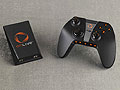
According to this article from Yahoo about OnLive - a new way to play high end games without the expensive and bulky gaming system, they even recommend playing these on a netbook...

What if you could stream top-end games to your TV, just like a Youtube video that you can control? You'd never need to buy a console again.

That's the future envisaged by Palo Alto startup OnLive, which plans to launch a groundbreaking gaming service this winter. OnLive will supply players with a small set-top box, not much bigger than a Nintendo DS, which will plug into your TV and your home broadband connection. From there, you can start playing games just like those on the Xbox 360, PS3 or PC -- but with no install time, no waiting for downloads, and no need for big, noisy, expensive consoles cluttering up your living room. OnLive's service can be continually upgraded, too, so you'll never be stuck with obsolete hardware again.

Skeptical? So were we, until we actually sat down and played with an OnLive box last week. Even a blisteringly fast racer like Burnout Paradise was totally playable over the service, and top-spec shooter Crysis: Warhead -- which normally requires an expensive gaming PC -- ran excellently too. It's all rolled together with a slick interface that requires just a few button-presses to get playing.

OnLive also includes some features you might associate more with your DVR than with a gaming console, including a Replay feature that lets you save the last ten seconds of your gameplay, and send it to your friends.

PC gamers aren't left out, either: OnLive's service can be accessed with a browser plugin from either Mac or PC platforms, works identically to the TV version, and has hardware requirements so low you'll be able, the company boasts, to play the most advanced of games on a $300 netbook.

OnLive has already signed deals with an impressive range of partners -- including EA, Take-Two, and Ubisoft -- and promises to have an up-to-the-minute selection of games when the service launches. Along with Burnout and Crysis, we spotted Grand Theft Auto IV, LEGO Batman, and Mirror's Edge among the games on offer, although the lineup will likely change before the service launches.

There's a catch, though. Being an online, streaming service, OnLive is only going to be as good as your Internet connection. High-definition resolutions will require a higher-end broadband connection, and if your service is prone to drop out unexpectedly, you're probably going to wind up frustrated. Even if it works, all that streaming video's going to add up over the months, and heavy users might find themselves the receipient of some unwelcome attention from their ISPs. Modem users, needless to say, need not apply.

OnLive won't talk price, other than to say that they'll be competitive with subscription services like Xbox Live. The box itself is simple and cheap to make, they told us, and it's easy to imagine it being thrown in with subscriptions -- rather like a cable or satellite TV set-top box. Games will most likely be available to rent or buy, and with free demos that don't need to be downloaded.

Samsung's N310 Premium Netbook


With offerings like this from Samsung it shouldn't be too difficult for Apple to roll out a gamebuster in the $600+ range. I mean who in their right mind would drop that kind of coin for a Netbook with the specs listed below:

Here’s the tech spec on the N310:

  • Processor: Intel Atom Processor N270 (1.60GHz, 533MHz, 512KB)
  • Operating System: Microsoft Windows XP Home with SP3
  • RAM: 1GB
  • Display: 10.1 “WSVGA (1024 x 600) Super Bright glossy, LED Backlight
  • HDD: 160GB (SATA 5400 RPM)
  • Network: Wi-Fi 802.11b/g/n; Bluetooth 2.0+EDR;
  • HSDPA/WiMAX/WiBro; 10/100 Ethernet
  • GPU: Intel GMA 950
  • Battery life: Up to 11.5 hours (6-cell); up to 5 hours (4-cell)
  • 3-in-1-card reader
  • 1.3-megapixel camera
  • 3 USB ports
  • VGA port
  • Integrated mic, microphone input and headphone jack
  • Antibacterial Keyboard with SilverNano Technology
  • Weight: 1.23 kg
  • Dimensions: 262 x 184.5 x 28.0 mm

Am I missing something here? Can you enlighten? Yes it is a cool case but a $300 premium???

C'mon Apple - Fire AWAY!!!

Tuesday, March 24, 2009

$199 Dell Mini???


Hot off the presses...
Dell is offering a bare bones mini for $199 (pre shipping/handling cost). Although the stats are in line with what you would expect for this pricing (512MB Ram, Linux, Small 8GB SSD, no camera, white ONLY) with shipping you can get out the door for $220'ish with 1 year of support. Hmmmm, wonder how the Intel Atom pricing may affect this. I priced one with the options of a "standard netbook" (1G Ram, Camera, 32GB SSD) and it is basically $350+ which is about the going rate. Interestingly enough - with this configurator, you cannot go with a standard HD or XP.

Getting more interesting everyday. Suddenly OLPC seems much more feasible.

Keep you posted...

Atom Chip Prices and Netbooks

According to Digitimes, Intel is considering a price hike on its Atom N270 processor (core to most every netbook on the market). Why not surprising given the state of the pc industry as a whole - it would be incredibly shortsighted to slam the brakes on the one segment that is experiencing explosive growth to bolster a single quarter's earnings. However, we are talking about a chip giant and a supply/demand scenario that could inflate (but imo, more likely slow the price decline) of netbooks. So it may take longer for there to be a $200-$250 netbook on the market and could fuel ARM based netbooks that will not run Windows to take the low cost segment of the market.

Interesting ZD article here. I have posted a quick excerpt below:

"Why does this matter? For one, it shows just how hot netbooks — and the low-power components that run them — really are. So much so, in fact, that Intel can raise component prices on this segment while the rest of the laptop market is seeing falling sales, narrow profit margins and oversupply thanks to a global downturn (though the trend is supposed to eventually reverse, that hasn’t quite happened yet)."


What are your thoughts on pricing, Intel chipset and alternatives?

Monday, March 23, 2009

Tethering your iPhone


According to Gizmodo, you can now tether your iPhone to your net-b or laptop. This is very interesting because of 2 factors (both of which will take some time to be clearly defined):

1. Will ATT charge for tethering on "unlimited" data plans? - (and if history proves anything - this will be a RESOUNDING "YES!" ATT is not interested in you maximizing your usage at the cost of a very lucrative additional revenue stream - say to the tune of $60/month for data on your laptop with a 3G card, so I can't imagine there won't at the very least be a "tethering fee" attached to this but we have to wait and see).

2. Will this push ATT & other providers to either offer more reasonable data plans, allow tethering or accelerate WiMax deployment? Again, no providers are incented in any way, shape or form to allow you to maximize a service you already pay for at the expense of another service they are getting revenue for today. I tend to believe - much like the explosive growth of netbooks, they may be forced to concede some ground on this. Ideally, they could bundle it into your voice plan, potentially subsidize a net-b or similar device and lock you up for a 2 year agreement therefore making you happy and contractual keeping you as a customer for 2 years at a higher monthly rate than phone/data plan only.

As the economy continues to lanquish, it will become more interesting each quarter as revenue expectations ratchet up on these companies. I will be watching this very closely and keep you posted as this evolves.

Hit me back with your thoughts.

Movie quote:

"I see all this potential, and I see squandering. God**** it, an entire generation pumping gas, waiting tables; slaves with white collars. Advertising has us chasing cars and clothes, working jobs we hate so we can buy shit we don't need. We're the middle children of history, man. No purpose or place. We have no Great War. No Great Depression. Our Great War's a spiritual war... our Great Depression is our lives. We've all been raised on television to believe that one day we'd all be millionaires, and movie gods, and rock stars. But we won't. And we're slowly learning that fact. And we're very, very pissed off."

Wednesday, March 18, 2009

Linux down, Android up?

It appears that Linux adoption is lethargic at best. Many users just aren't as familiar with the Linux experience and if you think about it, it is not surprising when the core audience is just looking for a cheap computer. Basically, it breaks down like this - given an option of either THE operating system almost everyone has used and is familiar with OR an unfamiliar (although potentially more robust) operating system - people will "go with what they know" This is just a basic fact - neither right or wrong. That is not to pick on Linux. ANY "different" operating system is going to face the same challenge. Change can be good but adoption rates will only increase when a "must have" feature/function option drives change.

From ZD Net:

Linux is losing ground on the netbook front, but there lies opportunity for it in smaller, dedicated Internet-enabled appliances, said an Ovum analyst.

Laurent Lachal, open source research director at the U.K.-based analyst firm, said in a research note, Linux is not doing as well in terms of market share, compared to when it made its debut on the netbook market.

Lachal said: "After a strong start, Linux netbooks have now been overtaken by Windows netbooks and Linux is lagging increasingly behind in terms of sales."

While the first netbooks came with Linux OSes, manufacturers started finding Windows-based devices more popular, with customers finding they could not get accustomed to the Linux interfaces.

In the Philippines, Asus dropped Linux on all of its Eee PC models in the country because Filipinos were not taking to the Linux OS well.

But Linux could find its market as an OS for smaller, handheld Internet-enabled appliances such as Apple iPod Touch, said Lachal. The iPod Touch is a device similar to the iPhone but without telephony capabilities.

Linux, having had more success and a longer history as a phone OS, may be more suitable for such devices, said Lachal.

He added that Linux-based Android could be better positioned in this segment, with "increasing support" from the developer and ISV (independent software vendor) communities.

Google's recent revenue-sharing announcement for the Android app market is also expected to help raise developer interest in the platform. The increased variety of apps may also make Android more attractive to consumers.

Thoughts? What is your net-b running?

Movie quote:

"I'm not even supposed to be here today!"

Tuesday, March 17, 2009

Lenovo learning "Pocket Yoga"


An interesting format for another Net-b iteration (albeit with a somewhat questionable name - "pocket yoga" sounds like an updated version of the world famous/infamous "pocket pool"). Above is a pic from ZD (short article here). I like the theory on this but it also has a little PSP/DS look to it that I don't know if I care for. Otherwise, a nice addition that shows manufacturers (whether they want to or not) are dedicating r&d to this segment, so Kudos, Lenovo!

Definitely a fresh take on the net-b segment and I think we will see more innovation/market differentiation as Apple decides what it will inject into the segment. Otherwise it is a zero sum price war to the end. As this segment matures and evolves, there will be opportunities for innovation and functionality upgrades from all the manufacturers. I am sure there will be functionality focused versions, design/ergonomic focused versions and segment busters that turn everything to "11".

What are your thoughts? Also, as a net-b owner what ancillary, peripheral and accessories are YOU most interested in?

Movie quote (St Patty's tie-in = Brian Cox aka O'Hagan):

ac: But our shenanigans are cheeky and fun!
Thorny: [referring to Farva] Yeah, and his shenanigans are cruel and tragic.
Foster: [after a pause] Which... makes them not really shenanigans at all.
Mac: [in a silly voice] Evil shenanigans!
Captain O'Hagan: I swear to God I'm going to pistol whip the next guy who says, " Shenanigans."
Mac: Hey Farva what's the name of that restaurant you like with all the goofy shit on the walls and the mozzarella sticks?
Farva: You mean Shenanigans?
Mac: (handing gun to O'Hagan) OOOOOHHHHH.

Friday, March 13, 2009

eee Remote Back Up service

***As a follow up to my post here, eee has an online back up service geared to the Net-b market. You can check it out here Although this does not address the a/v and attack aspect, the fact is new ancillary niche products are being launched SPECIFICALLY for the net-b segment. Good stuff and I'm sure there will be more to come...***

Thursday, March 12, 2009

Google Voice, Bluetooth and Netbooks

Sounds like a trifecta to me. Imagine having one super portable device, a portable take anywhere number and soft phone client on your net-b (Insert beachfront dream here). The mobile office is finally here. Once Wi-Max is widely available, there will be no stopping the mobility of the masses. See info below on the Google Voice updates:

(from Sam Diaz's blog here.)

Up until today’s announcement, Google really hadn’t done much in terms of enhancing or upgrading GC’s features. But with the upgrade to GoogleVoice, there will be new features that I hadn’t even considered. Among them:

  • Automated voicemail transcriptions: Users can choose to receive free fully-automated transcriptions of voicemail messages that become searchable in the Google Voice inbox.
  • SMS messaging: Google Voice numbers can now accept SMS messages and forward them to your mobile device and in your Google Voice inbox and reply from either one, as well.
  • Conference calling: If you’re on the phone and get another call, you can merge them - linking up to six people on a single call.
  • International calling: Place calls from your line and pay for them using Google Checkout
  • New forwarding features: Set up custom rules that allow you to determine when and where calls are routed, forcing calls to voicemail late at night, ringing on the cell phone only during off-peak hours and at the office during work hours.
  • Gmail Contacts: Google Voice integrates contacts from the Gmail address book.


I’ve been a fan of GrandCentral for a long time, largely because I see it as useful tool for the mobile and virtual worker. The Web economy has created an always-on, always-connected, always-available sort of work mentality. The new tools in Google Voice allow the flexibility of being connected no matter when or where without losing the capability to disconnect when it’s time to step away.

Google Voice is a free service. Existing GrandCentral customers will migrate over in the next few days and the service - which had been in closed beta - will open up to users in the U.S. over the next couple of weeks. It will be integrated with Google accounts (meaning your Gmail user name and password will work).

AWESOME!!

Netbook security and how it fits into today's workplace

Not really earth-shattering news, but (surprise) if you don't run a/v, firewall or keep your security bulletins up to date - you will get hacked. I provided a truncated version of the article from Telcommunicationsonline if you want to read the whole article. Below I have highlighted some areas of interest and after the article - see my feedback.

by Kelvin Soh, Reuters Newswire
Wed. March 4, 2009

TAIPEI (Reuters)

GROWTH CEILING?

Netbooks were a glimmer of light in the tech sector last year, and IDC research firm says they could dramatically outperform the overall PC market in 2009. It forecasts netbook shipments will more than double to nearly 21 million units this year, compared with about 4 percent growth to 305 million units for all PCs.

Netbook pioneer Asustek believes its models already include built-in security features and other options that are sufficient for the typical user, said Samson Hu, who runs the company's netbook operations.

"We've got a tie-up with Symantec where users who want to can pay a little more for that additional security," he said.

"We've received lots of good feedback from users, but of course, everyone should be aware of Internet security issues when they are connected to any network."

Some experts say netbooks' inability to run effective security could crimp future growth, scaring away lucrative corporate users who regularly deal with sensitive data. Corporate buyers now account for more than half of all PC sales.

"For most companies, they'll still choose conventional laptops that allow them to run software that protects the information hidden inside it," said Eric Ashdown, senior director for security strategy and risk management at Accenture.

"If I'm somebody doing corporate IT work, I wouldn't be looking at netbooks as a viable option. I would need more security, which they can't offer right now."

But Ashdown also pointed out that netbooks could be protected by the types of customers that buy them, casual users who tend to store less valuable information on their computers.

"Most attacks go to where the data is, where the economic value is," said Accenture's Ashdown. "If I were a hacker, I'm not sure I would go for netbooks. What would I find there? Family photos?"

(Editing by Doug Young and Megan Goldin)

To some degree I concur with the statements above. But the "If I'm somebody doing corporate IT work, I wouldn't be looking at netbooks as a viable option. I would need more security, which they can't offer right now." statement is a little too ambiguous in that Net-b's will not replace workhorse laptops. HOWEVER, as adoption rates increase for Cloud-based apps, and Wi-Max/3G/4G connectivity rolls out, there will be NO NEED to run processor intensive apps on the machine - THE NETBOOK BECOMES A GATEWAY TO PRODUCTIVITY. Just my .02.

Btw, what add-ons, peripherals, must haves are you seeing for your Net-b? Wireless mice/keyboard, optical drive, external hard drive, port expander??


Movie quote:

Herman:
You guys have it real easy. I never had it like this where I grew up. But I send my kids here because the fact is you go to one of the best schools in the country: Rushmore. Now, for some of you it doesn't matter. You were born rich and you’re going to stay rich. But here's my advice to the rest of you: Take dead aim on the rich boys. Get them in the crosshairs and take them down. Just remember, they can buy anything but they can't buy backbone. Don't let them forget it. Thank you.

Wednesday, March 11, 2009

Scale down Mac OS X or scale up iPhone OS?

Another guess fest on what Apple is going to do next. (they have certainly got the bees buzzing - see my earlier post on Wintek here). As I mentioned earlier, Apple is really in the best position to shake up the netbook arena. The only guarantee is that it will not be a $300 unit (my guess would be $699 to $849). Read more here.

Tuesday, March 10, 2009

Video for new Asus 1008HA

From ZD Net Video:


Very Nice - Although a launch date and pricing have not yet been announced.

Acer Refurb - $239

Another low priced net-b over at tigerdirect.com This Acer is the 8.9" so not a huge price break but it is below the $250 threshold. Looks like the smaller net-b's may well dip below $199 soon. Guess we'll see how the PC manufacturers handle the pricing going forward but it would appear that including additional features (amp up the processor/memory, screen size, graphics, ports etc) and charging incrementally may offset the sliding price drop on the low end budget models.

Apple Netbook News

According to the article below from Digitimes, Wintek is working with Apple for a touchscreen netbook to be delivered in the 3rd quarter:

Wintek to supply touch panels for Apple netbook, says paper
Latest news
DIGITIMES ICT/FPD Report

Yvonne Yu, DIGITIMES, Taipei [Monday 9 March 2009]

Taiwan-based Wintek will supply touch panels for Apple's new netbook, and shipments will start in the third quarter this year, according to a Chinese-language Commercial Times report.

Wintek revealed that it is currently working with Apple to develop some new products, but it said it does not know what applications the new products are for. Wintek added that no shipment schedule has been worked out yet, but shipments are likely to begin in the second half of the year.

Quanta Computer will be the maker of Apple's new netbook, the Commerical Times report said.

Wintek has reported that its consolidated revenues for February totaled NT$1.81 billion (US$52 million), representing a 25.69% increase from NT$1.44 billion in January, but a 21.65% decrease from NT$2.31 billion for the same month in 2008.

The increase was mainly contributed by rush orders from handset clients who were stocking inventories after the Lunar New Year holidays in January, market sources said, adding that sales were also helped by the fact that there were more working days in February than in January.

Wintek's accumulated consolidated revenues from January to February were NT$3.25 billion, down 38.79% on year.

Certainly makes things interesting especially since there are already Hackintosh net-b's in the market today. The 2 things that come to mind are:

1. Pricing - Even if Apple doubles up on the low-end priced net-b's (priced ~$300 making the Apple price point ~$600+) That is well below their MacBook pricing of $1,000 + Still a compelling solution for people not wanting to go $1000 in on ANY new computer.

But even if you don't get the nice fat margins on LOWER MacBook sales, you can offset that by entering the GROWING (and some would say exploding) netbook market and offer your market differentiator (OSX) and the Apple brand power without competing in the "me2" space. This should get very interesting (if true) Hmmmm...

2. Functionality - This is interesting based on the Touchscreen aspect (is it an Ipod touch on sterroids???) By entering the market later, Apple gains insight in to what consumers like/dislike and want on their net-b. Imagine if you could get more battery time, internal optical drive, more ports and a touchscreen - suddenly $600 - $700 doesn't seem out of line. Clearly, Apple is not going to market to the bottom dollar crowd but that has never been their market. They can also position synching with your Iphone, pod, touch etc.

What do you think? Do you think this (a) will happen and (b) by Q3?

Talk to me people!!

Movie quote:

"If you hold back anything, I'll kill ya. If you bend the truth, or I think you're bending the truth, I'll kill ya. If you forget anything, I'll kill ya. In fact, you're gonna have to work very hard to stay alive Nick. Now, do you understand everything I've just said? Cause' if you don't, I'll kill ya! Now, Mr Bubble and Squeak, you may enlighten me."

Monday, March 9, 2009

Sub $300 HP Netbook

Fresh from my inbox (and our good friends at ecost), I just received and offer for a $289 HP Netbook (refurb). Check the stats here. While new Netbooks are still in the ~$350 - $500 range, I believe we will see sub $200 net-b's by eoy. Certainly as the refurb market starts to crank up (anyone recall the impact of refurb Ipods??), we will see prices to trickle lower.

On a related note, as I am more visible with my net-b, I am receiving more and more comments such as, "hey, how do you like it?" or "I am considering getting one as a desktop replacement, what are your thoughts?" or "How much does one of those run you?" It appears these devices are gaining traction and will only continue to gain marketshare regardless of economic circumstance.


So to all you window shoppers - get in the game! You'll be glad you did.


Movie quote:


"My name is Turkish. Funny name for an Englishman, I know. My parents to be were on the same plane when it crashed. That's how they met. They named me after the name of the plane. Not many people are named after a plane crash. That's Tommy. He tells people he was named after a gun, but I know he was really named after a famous 19th century ballet dancer."

Saturday, March 7, 2009

Moore's law and the PC Industry

Below is a post from Adrian Hughes (link here) about the PC market and Moore's law correlation. I highlighted the Netbook paragraph. Also, it appears that Asus is in talks with Qualcom about a their chipset. Asus is also culling the 7" model of their line up.

Cheap, low-powered PCs seem to be the consumer’s choice during these hard economic times. Problem for the OEMs is that the margins on these low-spec systems are razor thin. Has Moore’s Law caught up with the entire PC industry?

Go back five years and the laptop and desktop computer market was split into three distinct sub markets - budget, mainstream and high-end. While high-end had the highest margins, OEMs made most of their money from mainstream models. The margins for budget systems were low but since most of these were little more than junk, that seemed appropriate.

Fast forward to today and things are different. High-end still offers OEMs the largest margins, low-end the smallest margins, and OEMs still hope that mainstream sales will dominate sales of low-end systems. Problem is, Moore’s Law has driven the computing power of low-end budget systems to a point where they are more and adequate for the needs of the average user. In fact, thanks to Moore’s Law it’s getting to the point where low-end is the new mainstream, and since margins are razor thin for these types of systems, This is good news for consumers, but bad news for OEM’s bottom lines. And to make matters worse, even games aren’t driving the high end like they used to, which could well be down to the fact that many PC games are actually ports of console games, and all the major consoles are now getting a bit old and in need of a refresh.

It seems that this shift to lower-powered, lower cost systems could hurt Apple, especially if NPD data for January is accurate. For January the data showed that while for Windows-based systems the revenue unchanged compared to January ‘08, while for the Macs revenues dropped by a massive 10.4%. Another takeaway from the NPD data is that over the same period Mac revenues fell by almost twice as much as unit shipments, showing that people are now going for lower-priced units.

I have to be honest and say that I only see things getting worse for OEMs. Take netbooks. Even a humble system such as Samsung’s NC10, with its 1.6GHz Intel Atom CPU and 1GB of RAM, is more than capable of running Windows 7, along with a raft of the most popular desktop application. This is a system that costs around $450. Throw in a keyboard, mouse, external CD/DVD drive and a flat panel screen and you have system that’s an acceptable desktop substitute for many people. A year from now these systems will more powerful and likely cheaper than the current raft of netbooks. Before long you’re got a system that’s up to the demands of casual gaming, and then the budget and mainstream sub-markets will have merged. Again, good news for consumers (assuming that enough OEMs survive the bloodbath to allow for competition), but bad for the OEMs.

The sales pendulum is continually swinging, but right now it’s heading in the direction of cheaper systems. OEMs are going to have to have to get used to thinner margins and scrabbling for market share.

Movie quote:

"Yo, This tastes like p*ss and flies, don't it?"

Bonus for knowing this one - makes me laugh everytime.

Friday, March 6, 2009

Why Apple doesn't need to make a netbook (yet)

From Silicon.com, an interesting perspective on why Apple has not jumped into the Net-b arena - YET. We'll see how much market share net-b's need to gain before an Apple iteration makes an appearance... Article posted below or link here.

Minority Report: Two good reasons Apple doesn't make a netbook

Don't expect it on the bandwagon soon

By Seb Janacek

So why hasn't Apple jumped on the netbook bandwagon? Seb Janacek has a few ideas…

As netbooks continue their inexorable rise up the wish lists of gadget hounds, businesses and ordinary folk alike, the clamour for Apple to join the market continues to increase from all sides.

That's despite both Steve Jobs and interim CEO Tim Cook categorically denying that Apple is about to enter what has been described as a 'nascent' market.

Jobs has also suggested that the iPod Touch and iPhone is in essence a kind of netbook, based on what they are commonly used for. He's not fooling anyone though.

Starting from essentially zero market penetration in late 2007, by the end of last year, roughly 10 million netbooks have shipped, according to IDC. They now account for seven per cent of all portable PCs, an extraordinary growth rate in a short time.

So what defines a netbook?

Jobs may have a point in that the Touch is great for web browsing and email, is lightweight, has wireless and is relatively cheap.

It's not ideal for office or productivity tasks. I'm a fan of the soft keyboard and will happily 'tap' out a hundred words or so of an email but a longer document is painful.

But at what cost? It's a loaded question.

Firstly, as Jobs claimed late last year, Apple doesn't know how to make a $500 Mac that 'isn't a piece of junk', as it's not in the company's DNA. Consider the current Mac Mini. A mere $100 above the $500 price point and it looks overpriced, probably because it is.

Secondly, Apple would undoubtedly sell bucket loads of shiny units if it did release a sub $500 OS X-powered netbook.

However, given the company would be competing in an aggressive and increasingly populated market with price being the key differentiating factor, its margins would be cut and its profits would suffer. An anathema to the Apple board.

Furthermore, sales of netbooks would cannibalise sales of higher margin, higher specification MacBooks, again resulting in more loss of profit.

Lest we forget, Apple has somewhere in the order of $28bn in cash thanks to its aforementioned high profit margin strategy and is well placed to sit out tough economic times and come out smiling the other side without compromising the same strategy.

Appealing to a customer who focused solely on price makes no sense to Apple. Someone who cares solely about price has a casual interest in quality and that is another anathema to the Apple brand.

Perhaps the very best reason to explain why Apple isn't bothering with netbooks for the time being was illustrated in a report from retail analysts Channel Checkers.

The firm surveyed Apple stores to track sales of iPod and Macs along with business trends at Apple stores in the US. According to their survey, 73 per cent of respondents said the top-selling computer was the MacBook Pro.

The top selling Mac in most Apple Stores surveyed was the high end MacBook Pro. The highest specification notebook Apple produces. In the US it retails between $2,000 and $2,800. Hardly low-cost netbook territory.

As we stand there are two reasons Apple isn't selling netbooks.

Firstly, Apple doesn't make netbooks because it can't work out how to make a notebook that can compete in that $500 space.

Secondly and more importantly, Apple doesn't make a netbook because, right now, it doesn't need to.

Netbooks, Wi-Max and the Cloud

Based on the empirical data out there let's take a look at the break down of how these three (hopefully) soon to be converged segments are currently performing individually and then discuss how convergence can collectively exponentially scale sales/revenue.

1. Netbooks: The hardware/thin client piece of the puzzle. In order to leverage the connectivity (Wi-Max) and application solutions (Cloud), you need the device - Netbooks.

  • Taiwan’s Market Intelligence Centre (MIC) had 2008 worldwide sales of netbooks at 8 million units, and predicted sales of 18 million units in 2009, which is 128% growth.
  • Gartner’s netbook numbers are more conservative. It predicted that worldwide netbook shipments will grow from 5.2 million in 2008 to 7.8 million in 2009. That’s 50% growth, compared to just 15% growth for the entire laptop market and a 21% decline in shipments for desktop PCs.
  • IDC reported that netbooks accounted for 30% of all laptop sales in Europe during the fourth quarter of 2008, with 3.6 million netbooks sold.
  • In 2008, netbook sales were still roughly about 10% of the global PC market, in terms of units sold. That leaves a lot of room for growth.
Clearly the message here is, netbooks are the fastest growing segment of the PC market and continued growth in sales volume and marketshare is expected if not being undeniable.

2. Wi-Max: The connectivity solution (forget fixed wireless, 3G, wireline, phone as a modem). High speed connectivity anywhere/anytime lets you leverage your netbook to connect to the applications you run from the cloud. The pipe is coming. From Clearwire:
  • Expand mobile Wimax network to cover up to 120 million Americans in 80 markets in 2010.
  • Bring Wimax to Atlanta, Las Vegas, Chicago, Charlotte, Dallas/Ft. Worth, Honolulu, Philadelphia, and Seattle in 2009.
  • Launch Boston, New York, Washington, D.C., Houston and San Francisco area in 2010.
  • In addition to the recent dual-mode 3G/4G wireless modem to be launched with Sprint, Clearwire plans to launch a personal hotspot that combines Wimax service (Clear service in Clearwire parlance) with Wi-Fi enabled products.
  • Meanwhile, Clearwire is leveraging its Intel partnership to have nearly 100 mobile Wimax devices on the market by the end of 2009.
I highlighted point 5 to reiterate the continued play of Netbooks (as the Atom chip is an Intel product). Clearly Intel has a vested interest in diversification of hardware leveraging its chips but Netbooks are a large portion of that market and will only continue to grow.

3. Cloud computing: Once you have the hardware and connection in place, you need to be able to access your data, applications and email (business and personal). As SaaS/DaaS/PaaS gains traction (bolstered by a grim economic landscape), more applications are being developed in the cloud which in turn evolves behaviors (think twitter, facebook, linkedin, google apps, and even OS providers beginning to test the cloud). As you can see below, the migration is happening now:

According to the Pew Research Center's Internet Project (9 page PDF of the report is here http://www.pewinternet.org/pdfs/PIP_Cloud.Memo.pdf):

56% of internet users use webmail services such as Hotmail, Gmail, or Yahoo! Mail.
34% store personal photos online.
29% use online applications such as Google Documents or Adobe Photoshop Express.
7% store personal videos online.
5% pay to store computer files online.
5% back up hard drive to an online site.

Overall, 69% of online users have done at least one of these six activities, with 40% of internet users having done at least two of them.

Convenience and flexibility are the watchwords for those who engage in at least one of the cloud computing activities listed above:

51% of internet users who have done a cloud computing activity say a major reason they do this is that it is easy and convenient.
41% of cloud users say a major reason they use these applications is that they like being able to access their data from whatever computer they are using.
39% cite the ease of sharing information as a major reason they use applications in cyberspace or store data there. At the same time, users report high levels of concern when presented with scenarios in which companies may put their data to uses of which they may not be aware.

90% of cloud application users say they would be very concerned if the company at which their data were stored sold it to another party.
80% say they would be very concerned if companies used their photos or other data in marketing campaigns.
68% of users of at least one of the six cloud applications say they would be very concerned if companies who provided these services analyzed their information and then displayed ads to them based on their actions.

The “cloud computing” data comes from a survey of 2,251 adults between April 8, 2008 and May 11, 2008. Some 1,553 respondents in the survey were internet users and the margin of error is plus or minus 3 percentage points for results based on internet users.

Obviously all three of these technologies are heading in the right direction. However, I believe if they collaboratively (either via direct co-marketing or at the very least developing strategic partnerships to move from products specific sales to holistic solutions) that the growth curve will be even stronger regardless of the economic challenges. Whew! What do you think???

Movie Quote:

Frank: "Recent research has shown that empirical evidence for globalization of corporate innovation is very limited and as a corollary the market for technologies is shrinking. As a world leader, it's important for America to provide systematic research grants for our scientists. I believe strongly there will always be a need for us to have a well articulated innovation policy with emphasis on human resource development. Thank you."

Frank: What happened? I blacked out

Pritchard: That was interesting. ha ha. Thank you very much. And, uh, your rebuttal? Mr. Carville.

James Carville: Oh... It... We... have no response. That was perfect.

Frank: That's the way you do it! That's the way you debate!

Thursday, March 5, 2009

Netbook as the multi-task answer to the Kindle

Interesting post here about using an Acer Net-b instead of the Kindle. The Kindle obviously has a cool factor but it is limited in functionality (reference Alton Brown's wisdom on uni-taskers). I mean if you really want to read books on a screen, why not use a machine that you can read, do work, network, connect to wi-fi, etc.?


Movie quote:


Don: Now Lincoln - he needed a good reason to start a war with the South. So what he did was he hired some Ninjas to come up there with their samuri swords, and their throwing stars and magic and they busted the Liberty Bell. BAM! Civil War! We're in it thick. Brother against brother. Ok, you got it? You're not gonna get this anywhere else you're gonna get it here - history class. KNOW YOUR PAST!

Wednesday, March 4, 2009

New ASUS (looking MACish) but you can call it mackin'

Congrats to Asus for coming up with a sleek new net-b. The 1008HA (HA - maybe they are laughing all the way to the bank). As you can see from the pic below, it is a nice looking machine.


For all you German speaking folks (or for more pics), you can check out the site here. Also, the official press release is below:

Eee PC™ 1008HA: Style. Take It Everywhere.

A mere 1” slim and 1.1kg light, the über-stylish Eee PC™ 1008HA is the embodiment of refined mobile computing. Dressed in a luxe pearlescent casing that gives off a captivating sheen, it features a desktop application bar called Eee Docking that provides one-click access to a full suite of exclusive software including:
• Eee Sharing: Makes it easy to synchronize Eee PCs™ with other computers and share messages and documents with other Eee PC™ users - even without Internet access.
• Eee Arena: Offers easy access to thousands of songs, videos, radio stations, games, magazines and more.

The Eee PC™ 1008HA offers great user comfort and convenience with its 92%-scaled keyboard, multi-touch touchpad, instant key (for quick access to Wi-Fi and the touchpad lock), Digital Array Mic, 1.3 megapixel camera, and comprehensive wireless connectivity options (802.11b/g/n, Bluetooth, 3.75G** and WiMAX**). It is also equipped with SRS Premium Sound
technology for pristine audio playback quality.

* Specifications are subject to change without prior notice. Please visit www.asus.com for more details.
** Available as an option.
*** Operation lifetime subject to product model, normal usage conditions and configurations.

Apparently the ASUS team is serious about bringing style to this very functional segment. It appears the eee now stands for "Easy, Excellent and Exciting" I like it!!

Movie Quote:

"Alright you Primitive Screwheads, listen up! You see this? This... is my boomstick! The twelve-gauge double-barreled Remington. S-Mart's top of the line. You can find this in the sporting goods department. That's right, this sweet baby was made in Grand Rapids, Michigan. Retails for about a hundred and nine, ninety five. It's got a walnut stock, cobalt blue steel, and a hair trigger. That's right. Shop smart. Shop S-Mart. You got that?"

Tuesday, March 3, 2009

Save the Netbooks


Not really an earth shattering "grassroots campaign/david vs goliath" situation but noteworthy none the less. A site has been set up to "Save the Netbooks" due to Psion Teklogix emailing and threatening various people about trademark infringement.

Directly from the site:
Psion Teklogix has sent "literally hundreds" of cease & desist letters (sample) to netbook manufacturers and retailers (as well as bloggers and journalists) giving them until the end of March 2009 to "transition to a different descriptive term".

(I posted on this earlier but apparently the battle is heating up - You can re-visit the post here). Let's keep the information flowing and see how this plays out.


Movie quote:

Louise: How did you get here?

Johnny: Well, basically, there was this little dot, right? And the dot went bang and the bang expanded. Energy formed into matter, matter cooled, matter lived, the amoeba to fish, to fish to fowl, to fowl to frog, to frog to mammal, the mammal to monkey, to monkey to man, amo amas amat, quid pro quo, memento mori, ad infinitum, sprinkle on a little bit of grated cheese and leave under the grill till Doomsday.

Monday, March 2, 2009

Deal or no deal

Interesting article over at Yahoo. I do find some of the data and logic compelling and must agree to some extent about the recommendations on #5 - Netbooks. I don't feel it is necessary to say "no deal" on Net-b right now.

But I will concede that in all likelihood a ~$199 price point will arrive and likely sooner rather than later (at least somewhat driven by cost/margins - HOWEVER - take a look at my previous post about the PC industry tanking in all other categories but one. And that one category's sales more than doubling in a recession riddled '09. That equals substantial demand at the current (yet slowly decreasing) price points). What does this all mean? Will a $199 price open the floodgates and bring in the masses? Who knows.

Just a quick final thought, pondered from the manufacturer perspective. Would I rather downgrade flagship brands in my laptop/utlra light categories to fit into a downgraded price point OR start with a baseline Netbook and offer upgrades to allow for greater customization and increased price points and larger revenue upside? Hmmmmm...

Movie quote:


"Here are just a few of the key ingredients: dynamite, pole vaulting, laughing gas, choppers - can you see how incredible this is going to be? - hang gliding, come on!"

And

"Does the fact that I'm tryin to do it for you - do it for you?"

PC sales to see worst fall in history - Gartner

Thanks to our friends at Gartner (article by ZDNet), for a Captain Obvious article - PC sales are tanking WITH THE EXCEPTION of ONE SEGMENT...
Wait for it...
Wait for it...

Then scroll past the gloom and doom to paragraph 3 - and


TA-DA! There it is. One growth segment, dare I say an OUTPERFORMING segment (doubling sales figures of '08) - but we already knew that didn't we??

Movie Quote:

"It's not about the money... It's about sending a message. Everything BURNS"

How do you tote your net-b?

Per my much earlier post, I did extensive searching for a net-b backpack and was severely underwhelmed by the amount of variety/selection/options. Don't get me wrong, there are a plethora of options for toting your net-b but it breaks down like this:

Low end of the spectrum - poly sleeves (basically glorified envelopes, made slightly oversized out of koozy/packing material) Check a sample here. Typical price range is ~$10 - $20

Mid-range - cases (these can be hardshelled or soft and typically upgraded materials (including leather) and add a pocket or storage space on the exterior) Check a sample here. Typical price range is ~$22 - $33+

Upper end (for lack of a better term and staying with an experience/cost grading scale) - backpacks (very limited offering for backpacks specific to the netbook. I found a handful of netbook specific backpacks but the look/feel/price wasn't very compelling) Check a sample of netbook backpacks here. Typical price is ~$30 - $50+

After much consideration and search/comparison, I ended out selecting this SwissGear Computer Backpack. I must admit I was very impressed with all the feature/functionality/coolness this bag provided save on issue - SIZE. It is a full sized backpack. The laptop/netbook section works fine but the footprint is well, fullsized. The up-side to that size is you can carry all the bells and whistles for your beloved net-b (external drive, cooling pad, external speakers, wireless mouse, etc).

To all the net-b OG's out there - Whatcha sportin'? Give me a shout back!

Movie quote:

"Fill it up again! Fill it up again! Once it hits your lips, it's so good!"